Book
Harmonic Facility For Instrumentalists
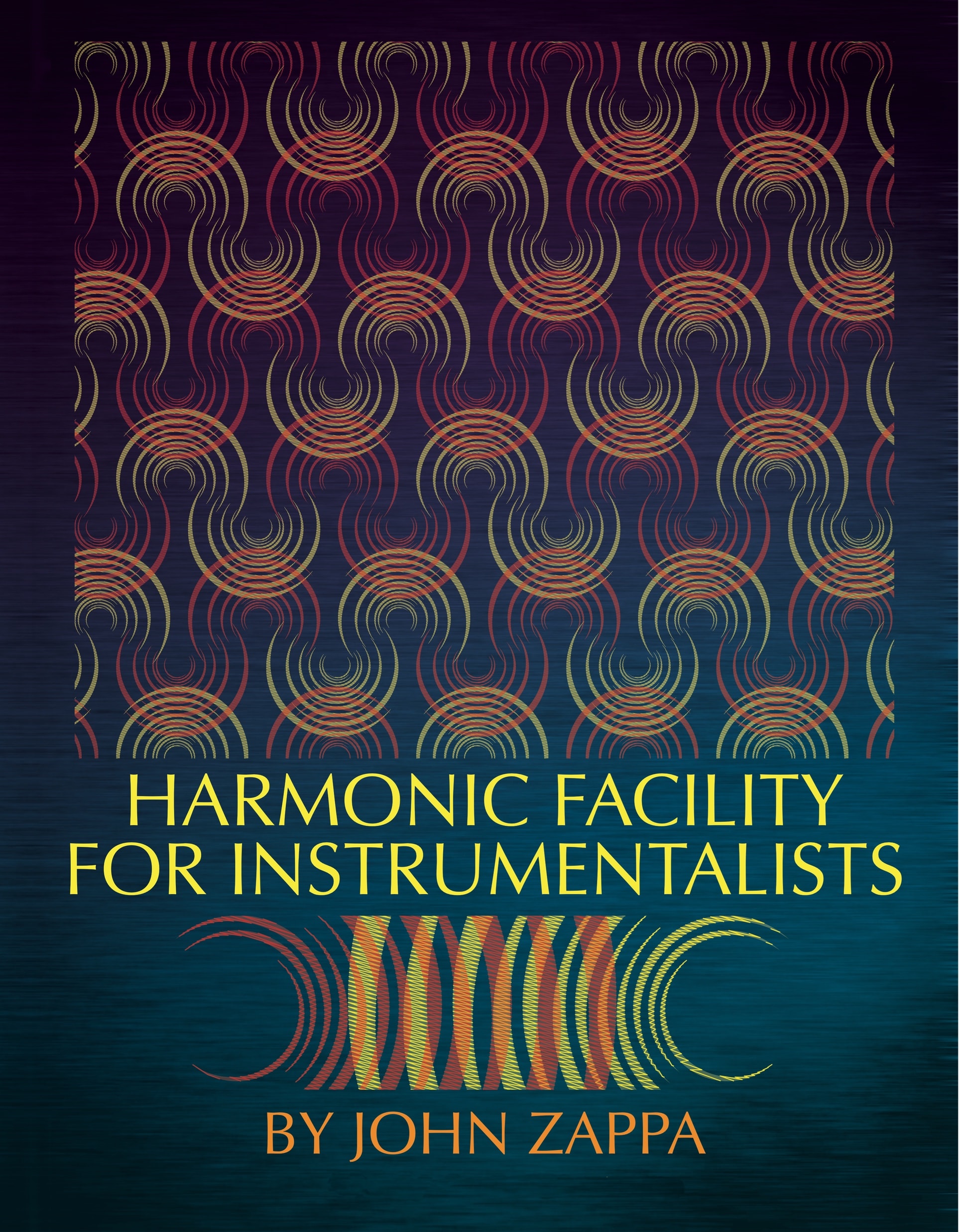
Drawing on decades of performance and teaching experience, John Zappa presents a thorough and accessible guide to music theory and its applications. From foundational concepts to advanced harmonic language, this book bridges the gap between academic theory and real-world musical practice.
Whether you are a student, working musician, or lifelong learner, this text offers clear explanations, practical exercises, and musical examples drawn from jazz, Latin, and contemporary traditions.
Rooted in jazz, Latin & contemporary music
Practical exercises for every chapter
Quick theory reference guides
121 pages!
Written by a working performer and educator
About the Author
John Zappa is a Cincinnati-based trumpeter, drummer, composer, and educator with decades of experience performing and teaching across jazz, Latin, funk, and classical styles. Professor Zappa teaches the trumpet studio at Northern Kentucky University as well as Jazz Theory, Arranging and Composition.
Inside the Book
Sample Pages

Table of Contents
Full overview of all chapters and sections covered in the book

Basic Patterns
Core melodic patterns mapped across harmonic settings and scales

Bebop Scales
Dominant Bebop Scale with arpeggios and deflections

Dorian Pentatonic
Applications of the Dorian Pentatonic Scale across chord types

Triads in Half Steps Guide
Chord applications derived from harmonic minor scales

Pentatonics Used in Jazz Solos
Real-world pentatonic applications from Kenny Garrett, Woody Shaw, Michael Brecker & more

Two Bar Polytonal Pentatonic Patterns
Half-step polytonal pentatonic workout patterns
Endorsements
What People Are Saying
John Zappa's Harmonic Facility For Instrumentalists is an impressive study addressing a compositional approach to jazz improvisation. This comprehensive method contains essential elements valuable to both the beginner and advanced improvisor, and Zappa's linear approach creates idiomatic vocabulary immediately useful in context of the music.
John Fedchock
Trombonist, Band Leader, Grammy Nominated Arranger & Educator
John Zappa's new book is a virtual treasure trove of information for the improvising musician, starting with fundamental building block material, and expanding to encompass many of the complex harmonic structures found in contemporary music. As the title suggests, it's not just for one instrument, but for ALL instruments! This book is highly recommended.
Jim Rotondi
Trumpeter & Educator
Harmonic Facility is a fantastic resource not just for useful practice regimes for all instruments, but also for inspiring creative jazz ideas. I particularly like the way he gets right to the connection between vocabulary and actual tunes.
Rick VanMatre
Saxophonist & Former Director of Jazz Studies, CCM, University of Cincinnati
I like John's book a lot and am working with it because it is simple and focuses on fundamentals. As a pianist, it gives me a concept for practicing contemporary linear jazz language that is specific, yet open-ended; it helps me develop approaches that I need for my concept on my own instrument.
Phil Degreg
Pianist & Educator
John Zappa's book is a wonderful compendium of practical exercises that will help every musician develop facility, technique, and fluidity. It is clearly organized, presents a challenge for players at every level and has practical application for improvisers in every genre of music. Hours of practice-room fun!
Brad Goode
Trumpeter, Bassist & Educator
Merging technical fingering exercises over jazz chordal structures and harmonic patterns, this book is wonderful for musicians playing any instrument that want to advance their technical and jazz improvisational skills. I am still trying to 'finger it out!'
Gary Winters
Trumpeter
The practical nature of these finely crafted exercises makes each study well defined and understandable. When these are applied to a specific harmonic progression it can yield very advanced harmonic implications. Through the work, you improve your technical ability on your instrument while at the same time expanding your ability to hear harmony. I'm sure players at all levels will benefit from this study.
Kim Pensyl
Composer, Pianist, Trumpeter & Educator